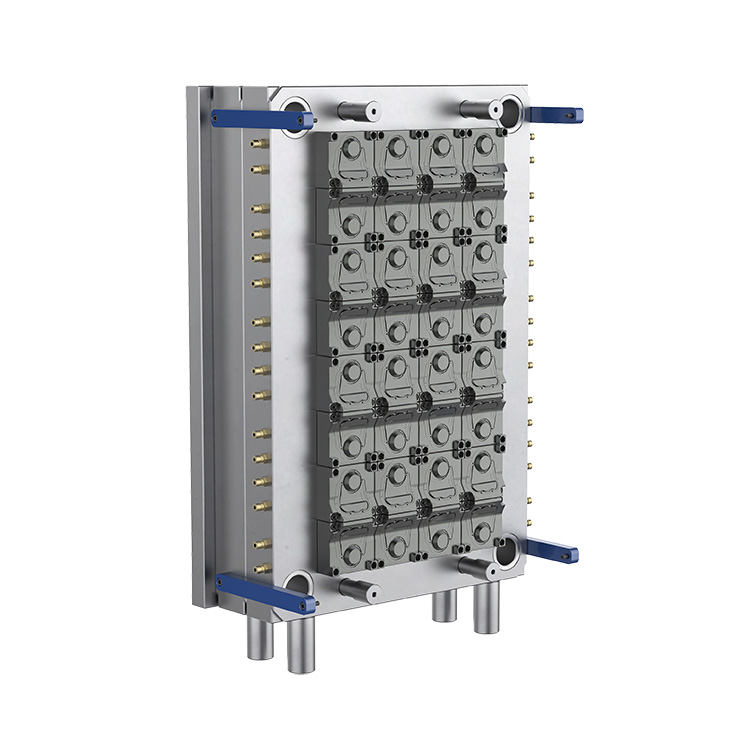
Daelong, a China-based injection mould manufacturer with over 30 years of industry experience, provides precision tooling solutions for high-volume plastic packaging production. The 96-Cavity 29 25 Neck Pet Preform Mould With Needle Valve Gate is designed for demanding PET preform manufacturing, combining a high-cavity layout, a controlled hot runner system, and compatibility with automated production equipment to support consistent output for beverage, food, and daily chemical packaging applications.
A high-performance PET preform mould directly affects production efficiency, dimensional consistency, material utilization, and downstream bottle quality. A 96-cavity configuration allows manufacturers to produce multiple preforms in each injection cycle, while a needle valve gate hot runner system helps control melt delivery at individual gates. For manufacturers using compatible Nestal injection moulding machines and five-station robotic automation, the right mould design can support stable, repeatable production. This article explains the mould's working principles, key material choices, engineering advantages, selection criteria, maintenance requirements, and practical considerations for evaluating a high-cavity PET preform mould investment.
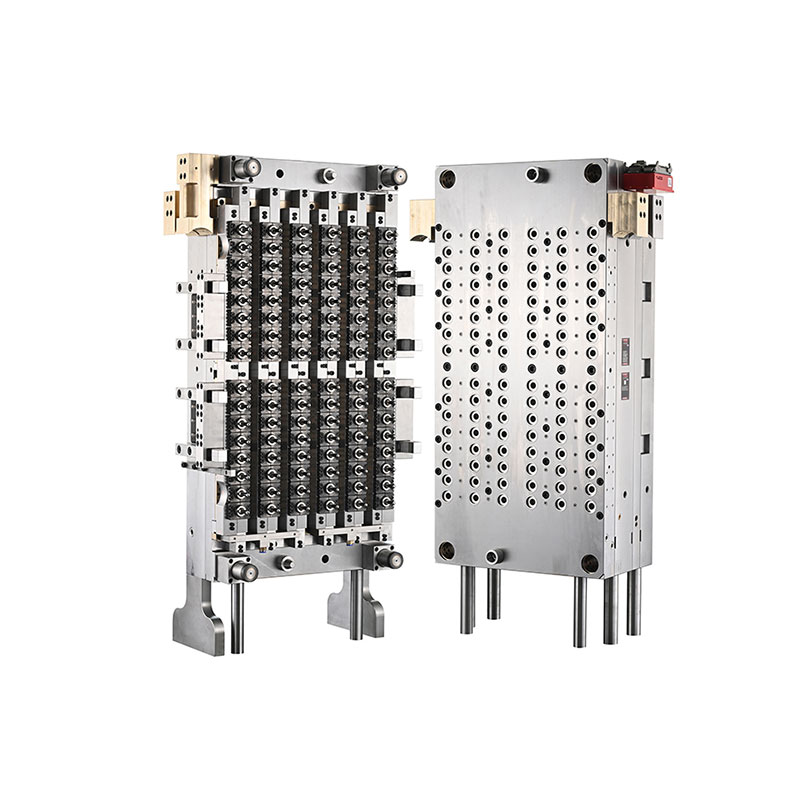
PET preforms are injection-moulded components that are subsequently reheated and stretch-blow-moulded into bottles or other containers. Their dimensions, material distribution, neck geometry, and surface condition influence the performance of the finished packaging.
A 96-cavity mould contains 96 individual cavity positions, allowing a properly configured injection moulding system to form up to 96 preforms in one complete moulding cycle. This arrangement is particularly suitable for manufacturers seeking substantial production capacity without relying on numerous separate moulding machines.
The 29/25 neck specification identifies the intended neck-finish design. Buyers should confirm the precise thread profile, sealing dimensions, closure compatibility, and relevant neck-finish drawing before ordering. These details determine whether the finished preform will fit the intended cap and bottle-blowing process.
According to Daelong's product information, this mould is designed for Nestal injection moulding machines equipped with a five-station robot system. Actual compatibility should be confirmed against the buyer's machine model, platen dimensions, injection capacity, and automation configuration.
In high-cavity injection moulding, distributing molten PET evenly across all cavities is a major engineering challenge. Variations in melt temperature, pressure, flow resistance, or gate performance can cause differences in preform weight, appearance, and dimensional accuracy.
A needle valve gate hot runner system uses a movable valve pin to control the opening and closing of the gate. The system is engineered to manage melt entry into each cavity and can help produce cleaner gate areas and more consistent filling when correctly designed, maintained, and synchronized with the injection process.
Daelong specifies a PC-VG series valve gate hot runner system for this model. The final results depend on the overall hot runner design, valve-pin condition, temperature control, injection settings, cooling performance, and PET resin preparation. Buyers should request a mould trial and sample evaluation to verify performance under their actual operating conditions.
Material selection is essential for a high-cavity PET preform mould because individual components experience different combinations of heat, pressure, friction, and repeated mechanical movement. Appropriate tool steels and hot runner materials help support dimensional stability, wear resistance, and reliable long-term operation.
The following table summarizes the materials and engineering information published by Daelong for this mould.
| Component | Specified Material | Published Hardness | Engineering Purpose |
|---|---|---|---|
| Cavity and core | Germany 2316 steel | HRC 42–45; precision hardening up to HRC 50–54 | Forms the preform geometry and supports wear resistance |
| Neck ring | Germany 2316 steel | HRC 45–50 | Forms the neck finish and closure interface |
| Valve pin | Japan SKD51 steel | HRC 58–60 | Controls gate opening and closing |
| Hot runner nozzle | U.S. beryllium copper | HRC 37 | Supports heat transfer in the nozzle assembly |
| Manifold plate | H13 steel | HRC 35–38 | Supports the hot runner manifold structure |
| Base plate | P20 tool steel | HRC 27–32 | Provides structural support for the mould assembly |
Note: The hardness values above follow the product page's published specifications. Buyers should confirm the final material certificates, heat-treatment condition, component specifications, and inspection records in the approved technical documentation.
Daelong also reports machining tolerances of 0.003–0.005 mm, component interchangeability of up to 90%, and preform wall-thickness concentricity of ±0.0075 mm at L = 100 mm. These are important technical evaluation points; their measurement methods, inspection locations, and acceptance criteria should be agreed upon before production acceptance.
The primary advantage of a 96-cavity configuration is its capacity to form many preforms in each cycle. When paired with a suitably sized injection machine, balanced filling, effective cooling, and automated handling, this layout can help manufacturers increase output while making better use of production floor space.
However, the actual number of acceptable preforms produced per hour depends on cycle time, machine availability, process stability, planned maintenance, and the percentage of rejected parts. Production planning should therefore use verified trial data rather than cavity count alone.
Consistent preform weight, neck dimensions, and wall thickness are essential for downstream stretch-blow moulding. Differences between cavities may lead to uneven material distribution, inconsistent bottle strength, or increased rejection rates.
A well-engineered hot runner, accurately manufactured mould components, and balanced cooling can help reduce these variations. Routine sampling and cavity identification are useful for detecting problems before they affect a large production batch.
Daelong identifies an interchangeable cavity structure as one of the mould's engineering advantages. Replaceable components can simplify targeted maintenance because a worn or damaged section may be serviced without replacing the entire mould assembly.
Buyers should confirm the actual interchangeability scope, spare-part availability, replacement procedures, and dimensional verification requirements. These details help maintenance teams estimate downtime and prepare appropriate spare inventories.
High-speed preform manufacturing depends on more than injection performance. Robot handling, cooling, conveying, inspection, and downstream blowing equipment must work together. Compatibility with the intended automation system helps reduce manual handling and supports a more predictable production workflow.
The 29/25 neck finish and 96-cavity layout make this type of mould relevant to packaging operations that require substantial volumes of PET preforms. The suitability of the finished bottle depends on the neck design, preform weight, resin grade, bottle geometry, and intended filling conditions.
Not every 29/25 neck finish is interchangeable with every bottle cap or filling line. Manufacturers should verify closure drawings, tamper-evident features, sealing requirements, and applicable packaging standards before committing to a mould design.
Selecting a high-cavity mould requires a review of the complete production system rather than a comparison of cavity numbers or purchase prices alone. A technically suitable mould should match the machine, resin, bottle design, production target, and maintenance resources available at the factory.
For additional product details, review Daelong's 96-cavity 29/25 neck PET preform mould with needle valve gate and its broader range of PET preform mould solutions.
Even a precision-engineered mould requires regular maintenance to sustain consistent performance. In a 96-cavity system, a small problem affecting several cavities can generate a substantial number of defective parts if it remains undetected.
Preventive maintenance can reduce unexpected downtime and make component replacement more predictable. The appropriate maintenance interval should be based on production conditions, resin quality, operating hours, inspection results, and the manufacturer's recommendations.
A 96-cavity PET preform mould contains 96 moulding cavities and can produce up to 96 preforms per complete injection cycle when all cavities are operating correctly. Actual production output depends on cycle time, machine performance, and product acceptance rates.
The 29/25 designation identifies the intended neck-finish configuration. The exact dimensions and closure interface should be confirmed using the approved engineering drawing to ensure compatibility with the selected cap and bottle design.
A needle valve gate system controls melt entry through movable valve pins. With appropriate design and process settings, it can improve gate consistency, support controlled filling, and reduce certain gate-related defects in high-volume injection moulding.
Daelong specifies compatibility with Nestal injection moulding machines equipped with a five-station robot system. The precise machine model and interface requirements should be confirmed before ordering, including clamping force, injection capacity, platen dimensions, and automation details.
Published specifications include Germany 2316 steel for the cavity, core, and neck ring; Japan SKD51 steel for the valve pin; beryllium copper for the hot runner nozzle; H13 steel for the manifold plate; and P20 tool steel for the base plate. Final material and hardness requirements should be confirmed in the purchase specification.
Manufacturers should maintain balanced hot runner temperatures, appropriate injection parameters, effective cooling, and clean moulding surfaces. Regular cavity-by-cavity sampling and preventive maintenance help identify deviations before they cause widespread rejects.
Provide the neck-finish drawing, preform weight and dimensions, intended bottle application, injection machine model, production target, resin specifications, automation requirements, and preferred delivery schedule. These details help the manufacturer evaluate compatibility and prepare a more accurate proposal.
A 96-cavity PET preform mould with a needle valve gate system can be a valuable investment for packaging manufacturers seeking high production capacity, repeatable preform quality, and compatibility with automated injection moulding operations. Its long-term value depends on precision engineering, suitable materials, balanced filling and cooling, reliable machine integration, and disciplined maintenance.
Daelong combines its experience in injection mould manufacturing with a product design intended for high-volume PET preform production. Before making a purchasing decision, manufacturers should evaluate the technical drawings, confirm machine compatibility, and establish clear acceptance criteria for mould trials and final delivery.
Looking for a reliable PET preform mould solution for your production line? Contact Daelong to discuss your 29/25 neck specifications, preform design, machine configuration, and output requirements. Visit the product page or contact us to request technical details and a quotation tailored to your manufacturing needs.